Showing posts with label Japanese American. Show all posts

Sunday, May 26, 2019

May 25, 2019 - Let It Not Happen Again


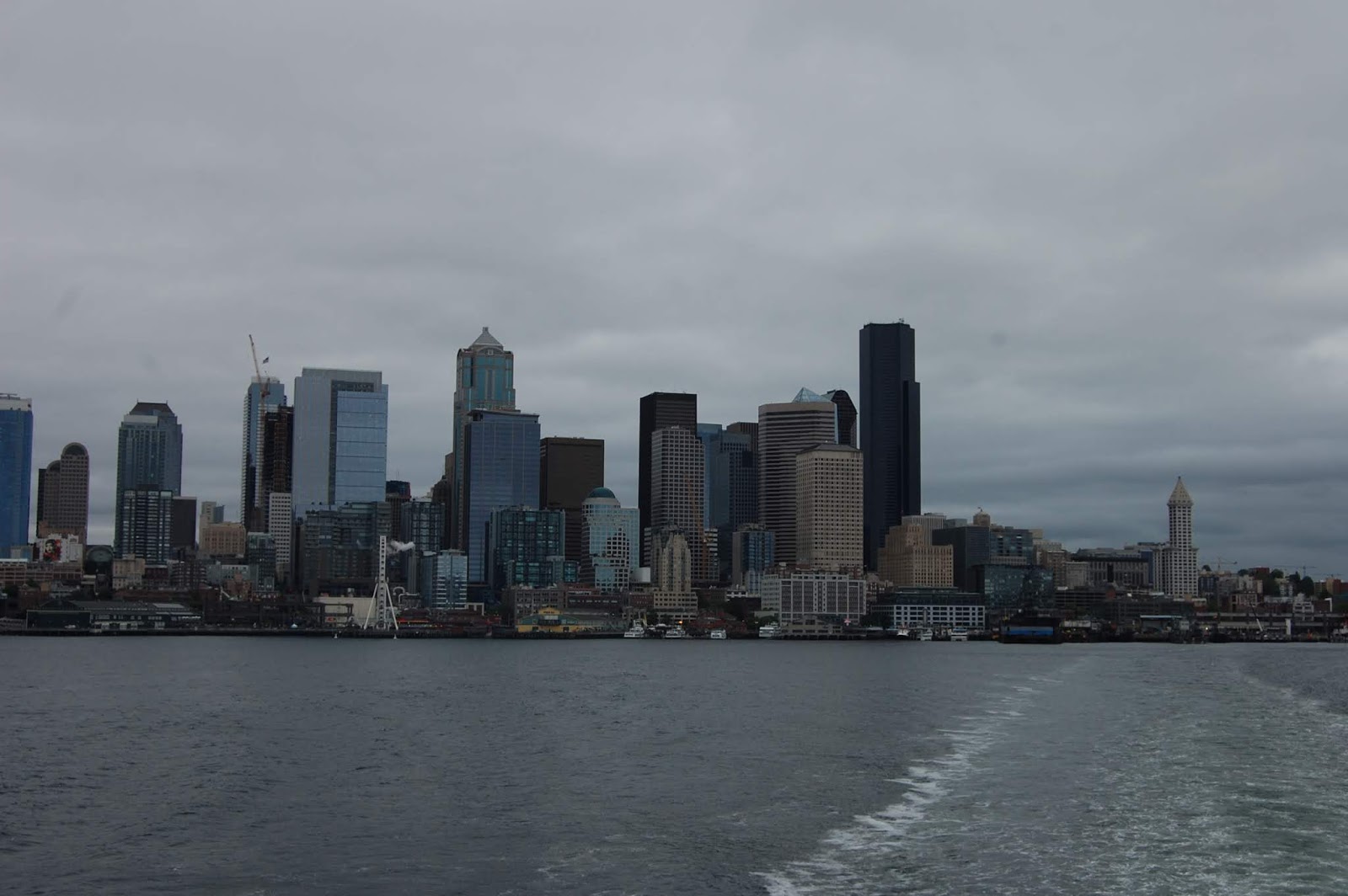
On a cool, rainy day, the colorful chains of paper cranes at the Bainbridge Island Japanese American Exclusion Memorial hang in stark contrast to the gray clouds and the old growth cedar, granite and basalt memorial wall bearing the names of the 227 Japanese-Americans that were ordered off Bainbridge Island and into internment camps as part of Executive Order 9066.  They were the first of 120,000 Japanese-Americans living in the west coast that were forced into interment camps.  Bainbridge Island is a short ferry ride across Puget Sound from Seattle.

At this site on March 30, 1942, with just six days notice, the entire Japanese-American population of flanked by soldiers with bayonets on their rifles, filed onto the ferry Kehloken.  Left behind were homes, farms and businesses.  Their belongings were limited to the clothes they could wear or carry in a single suitcase. 

At the end of the war about 150 residents returned to the island.  Some were lucky enough to regain their farms and homes due to the kindness of local caretakers.  Others had lost all that they had built.

The National Parks Historical Site is a unit of the Minidoka National Historic Site in Idaho, one of several interment camps.   It opened to the public in July of 2011.  The wall was designed by Johnpaul Jones, a local Native American architect.  It contains the names and ages of all 227 forced off the island as well as friezes depicting some of the scenes from that morning.

The site is dedicated to those who suffered and those who supported and stood by the Nissei forced off the island and to the ideal of safeguarding our constitutional rights for all. Nidoto Nai Yoni - "Let it not happen again."




Wednesday, March 26, 2014

March 26, 2014 - Mural Mural on the Ground


The mural of Seattle Center's Mural Amphitheater as reflected in a puddle on the amphitheater's stage.

Paul Horiuchi was commissioned to create a mural for the 1962 World's Fair.  The 17' x 60' work of art, "Seattle Mural" was initially placed over a pool and surrounded by some of the fair's temporary structures.  Mr. Horiuchi's "Seattle Mural" is a collage made of 160 color variations of Venetian glass installed on 54 panels.  The mural design began with pieces of colored paper torn and made into a collage.  It was intended to evoke the natural beauty and colors of the northwest.  It now provides a recognizable backdrop for dozens of public concerts, festivals and gatherings held each year at Seattle Center. If you knew of a band from Seattle, chances are they've played in front of this mural.

{Here is a 50 minute concert Pearl Jam played 8/23/1991, several days before the release of their first album "Ten". https://www.youtube.com/watch?v=hKFzoSWKnzg}

Mr. Horiuchi has a story not that unusual for Japanese Americans of his generation.  He was born and raised in Japan while his father worked for the Union Pacific Railroad in Wyoming.  In 1920, at the age of 16, he got on a boat to the US to join his parents, meet his father and his three younger siblings.  Mr. Horiuchi did well working for the railroad, but when the Japanese employees of the railroad were fired and evicted from company housing following the attack on Pearl Harbor.  As he was outside of the exclusion zone imposed by Executive Order 9066, Mr. Horiuchi wasn't placed in a relocation camp as many Japanese Americans on the West Coast were.  He scraped by supporting his young family with whatever work he could secure.  Things were bad enough that they actually applied to be placed in a relocation camp.  They were denied.

Following the war, Mr. Horiuchi opened an auto body shop in Seattle's International District.  For Mr. Horiuchi, art was a hobby.  His work had been recognized at regional art shows, but in 1950 a financial crisis compelled him to sell some paintings.  He quickly found that that there was a lucrative market for what had been his hobby.  He was able to sell his auto body business and start a new career in art.